Novaluxia Scam Claims: The Three Types of Post We Found, Sorted
We read through the accusation posts circulating in Filipino shopping groups. They fall into three very different buckets — plus one outcome that is neither fraud nor a misunderstanding.

Search the phrase "Novaluxia scam" and you will find posts. Plenty of them. We went through the ones circulating in public Filipino shopping groups and sorted them by what they actually contain, because the difference between the three buckets is enormous.
Bucket 1 — Documented complaints (real evidence)#
These posts include an order number, a payment receipt, a date, and a follow-up saying what happened next. Sometimes the resolution is good, sometimes it is not. Either way the post has the four things that make it verifiable.
How we treat them: as genuine buyer experiences. We do not generalise one order into a verdict on the platform, and we do not dismiss it either. If you sent one of these, the useful place to escalate is the app's own support flow, and we are glad to write the timeline up anonymously.
Bucket 2 — Fulfilment problems (not fraud)#
The largest group by volume. Parcels arriving late. A courier marking delivery as failed when nobody rang. A stock issue on a campaign. A reply from support that took five days.
These are real annoyances, and on a young platform in a market with uneven last-mile logistics they are also predictable. But a late parcel is not fraud. Conflating the two is what makes the whole conversation unreadable, and it is unfair to the people in bucket 1 whose complaints then get lost in the noise.
Bucket 3 — Unsourced screenshots (not evidence)#
This is the bucket that ends up with the most reach. A screenshot of a chat, a caption asserting theft, and no order number, no receipt, no date, and often no follow-up post ever again.
We are not going to repeat those as fact. A screenshot with no order behind it proves that somebody made a screenshot. It does not prove a scam, and it is not fair to the people actually waiting on a parcel.
Sorting the posts yourself#
| Ask this | Bucket 1 | Bucket 2 | Bucket 3 |
|---|---|---|---|
| Is there an order number? | Yes | Usually | No |
| Is there a receipt or payment record? | Yes | Usually | No |
| Is there a date and a timeline? | Yes | Yes | Rarely |
| Does the poster say what happened next? | Yes | Sometimes | No |
| Could you check it independently? | Partly | Partly | No |
Run that table over any viral post before you decide anything.
And one outcome that is neither fraud nor a misunderstanding#
There is a fourth kind of post that does not fit the three buckets: "I paid and got nothing."
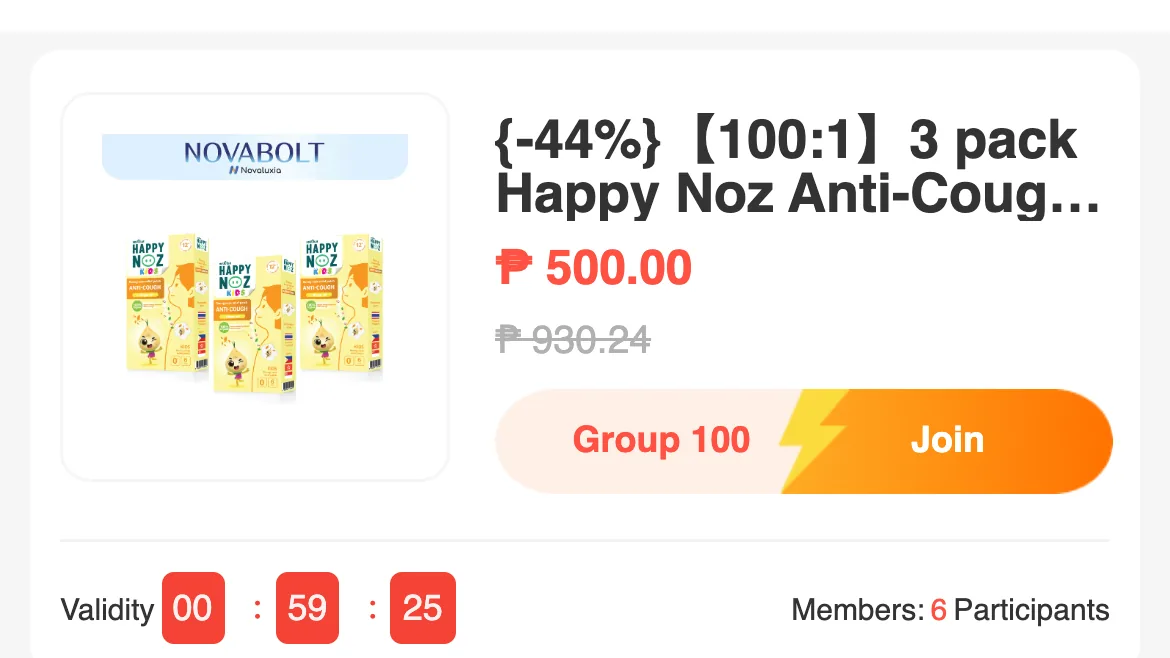
Once we worked through how the group buy actually runs, we could answer that one properly. The main group buy is a draw. Each group holds 100 people and has one winning slot; you pay the full listed price to join; if you do not win you receive a small reward (we read ₱5 to ₱85 on live campaigns in September 2026) and the payment is not returned. Only a group that never fills refunds the principal, and the failed draw records we pulled in September 2026 behave that way: a stand mixer group dated 18 March 2026 closed with three real participants and records the entry returned.
So "I paid ₱500 and ended up with ₱5" is a permitted outcome under rules the platform publishes on the product page. Winners get their items and failed groups refund, which is why it is not fraud. In the app we read the same outcome in plain English: a draw closes as Won or Unwon, and a group that misses closes as Group buying failed. This is also what happens to 99 out of 100 people who join.
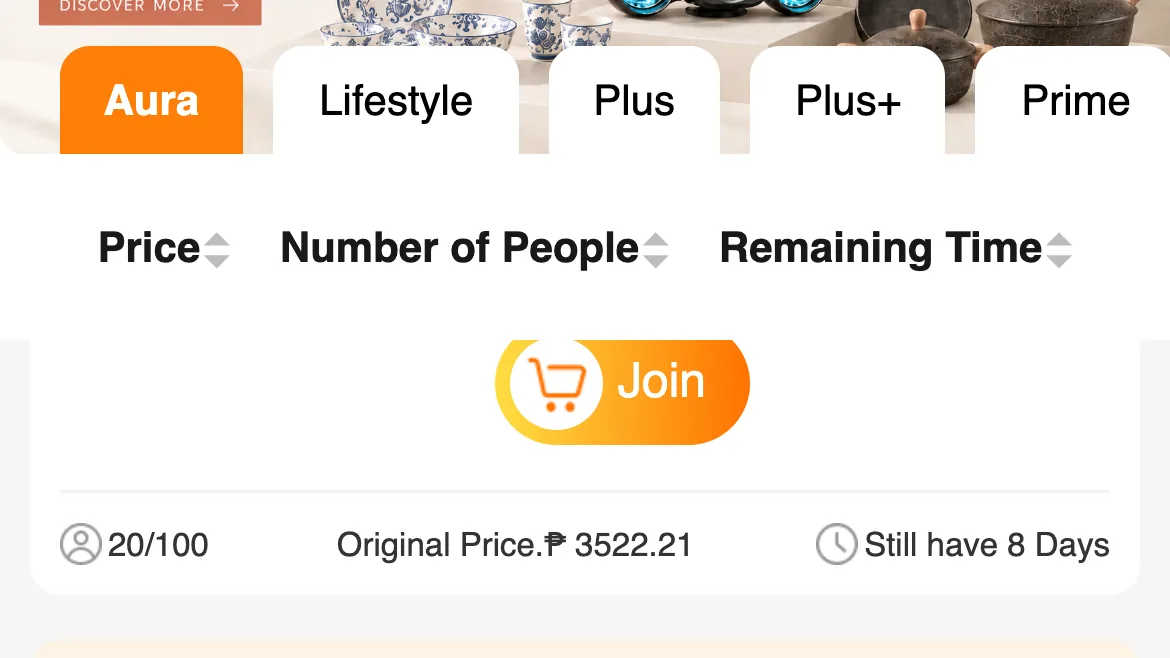
Those posts deserve to be read carefully, because the person writing them almost certainly did not notice the odds printed on the product title. It is also why we wrote the group buy walkthrough and the platform explainer.
What public sources actually show#
On the other side, what we can verify is limited but real: an operating brand site with dated news and event coverage, active listings on Google Play and the App Store, and a merchant partnership announcement dated 17 March 2026. The brand site's launch article runs under 18 August 2025 and a post about Day 1 of the NRCE 2026 retail expo under 9 August 2026. What remains unverified is the company's registration jurisdiction, founding date, headquarters, and the user and order figures used in marketing.
That combination, real but unproven, is the correct description. Not "safe". Not "scam".
The red flag that beats all of this#
The operation behind the name
Whichever bucket a post falls into, the pattern that actually causes losses in Philippine social commerce is the same: being asked to pay outside the platform. A personal GCash number, a bank transfer, a link that is not the app.
If a transaction stays inside the app, you have a record. The moment it leaves, you have a story. Read the 10-minute check before your first order, and see the legit check hub for the full method.
Quick answers
- Did you find proof that Novaluxia is a scam?
- No. We found no public record of a regulator action, court finding or mass non-delivery case. What we did find were genuine complaints about delays, alongside a large volume of posts that name no order, show no receipt and cite no source.
- Are the complaints you found fake?
- Not necessarily. A delayed or frustrating order is a real experience. Our objection is to complaints being generalised into 'the whole platform is fraud' without any order-level evidence.
- Should I believe a viral screenshot?
- Treat it as a lead, not a conclusion. Check whether it has an order number, a date, an in-app receipt and a follow-up. Without those four, it cannot support the claim printed on top of it.